Load Selection Shapes Everything Downstream
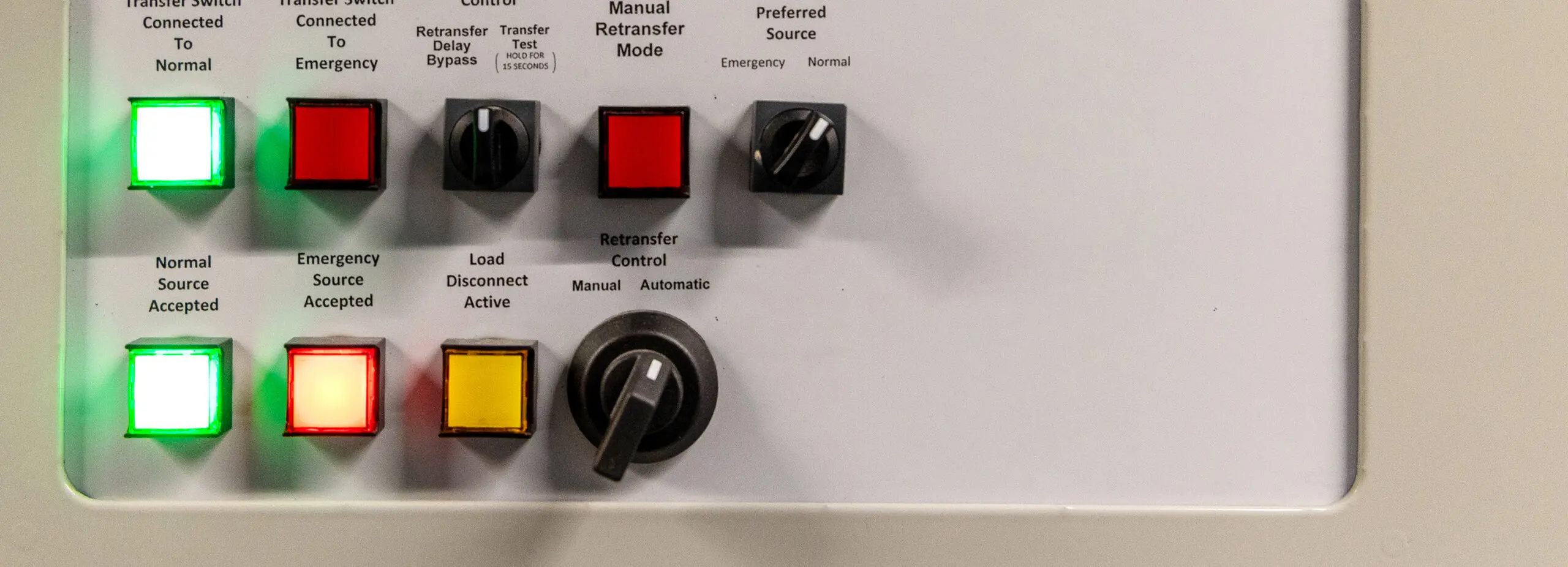
A standby system connects a generator and a utility feed through an automatic transfer switch (ATS). The ATS monitors utility voltage continuously. When it detects a sustained loss of power, it signals the generator to start. Once the generator reaches operating speed and stable voltage, the ATS transfers the selected loads. When utility power returns and stabilizes, the system transfers back and the generator shuts down.
Load selection is one of the first engineering decisions in a standby project. Some installations back up life-safety systems only — fire pumps, egress lighting, a single elevator. Others back up the full facility. That decision drives generator sizing and shapes everything downstream. Carter engineers work through it with the project team early.
The Right Rating Is an Application Decision
Generator ratings define how a unit is expected to operate — not just how much power it produces, but how often and under what conditions.
- Standby rating: The most common configuration. The generator runs during outages and periodic testing, typically around 200 hours per year with a maximum of 500. Average loading should remain at or below 70% of rated capacity, though the unit can carry higher loads for limited periods. During an actual outage, there is no restriction on runtime.
- Emergency standby: A lower duty-cycle rating — around 50 hours per year — for systems used rarely and briefly. If this profile fits a facility’s actual requirement, temporary or rental generation may be worth evaluating instead. Explore Rental Power
Carter engineers work through rating requirements with every project team. The right rating for the application affects sizing, configuration, and long-term performance.
Stored Fuel Requires a Maintenance Strategy
Fuel selection involves tradeoffs that go beyond upfront cost — availability, site infrastructure, and how the fuel performs under standby-specific conditions.
- Diesel: The most common choice: fast starting, widely accepted in code-driven environments, and familiar to contractors and inspectors. The challenge is storage: A generator that runs only for weekly testing doesn’t cycle through its fuel supply, and stored diesel degrades over time. Maintaining fuel quality requires a polishing system or scheduled maintenance program.
- Natural gas: Eliminates on-site storage entirely. In disaster scenarios, underground gas infrastructure often remains accessible when roads are blocked and diesel deliveries cannot get through. The tradeoff is cost — above roughly 200 kW, natural gas generator sets carry a meaningful price premium over equivalent diesel units.
- Propane: Serves remote sites where neither option is practical.
Carter engineers work through these tradeoffs with every project team, including implications for permitting, site infrastructure, and the long-term service program.
Redundancy Is Engineered In
A single generator is a single point of failure. For facilities where that risk is unacceptable, multi-generator systems provide the redundancy required. The most common approach is N+1: one more generator than the minimum needed to carry the load. If any unit goes offline — for service, for a fault, for any reason — the remaining generators cover it.
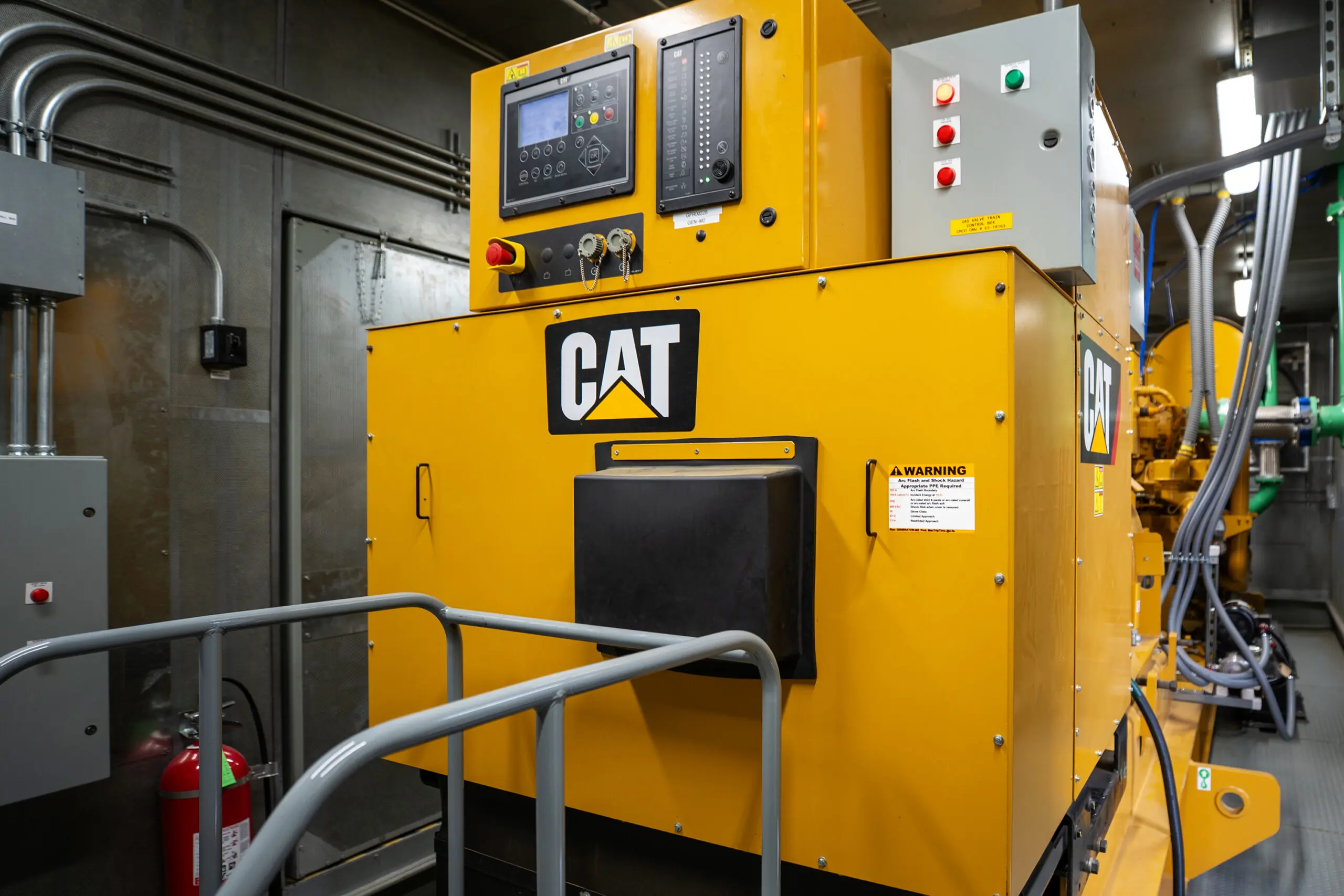
- Onboard paralleling: Integrated controls built into each generator’s panel, linked to share load and coordinate output. Modern generator control platforms have made onboard paralleling increasingly practical — functions that once required dedicated external equipment are now managed through the generators’ own controls.
- Traditional switchgear: Handles paralleling through dedicated external equipment. Switchgear adds complexity but provides an additional layer of redundancy in the control infrastructure itself. Healthcare installations frequently use this approach, and it is often code-driven as much as it is an engineering preference.
Carter engineers configure these systems based on reliability requirements, electrical infrastructure, and project constraints.